Tongue Ties & Lip Ties for
Babies
Feeding your baby should feel natural and comfortable—but for some families, it can be challenging. A tongue or lip tie may be one of the reasons. We’re here to help and support you with a thoughtful, personalized approach. Our Baby Consultations are with both a Pediatric Dentist AND Lactation Consultant for the best quality care.







The Most Common
Symptoms & Signs
Tongue and lip ties can affect how a baby feeds and settles. Every baby is different, but some common signs include:
Baby's Symptoms
Difficulty latching or shallow latch
Clicking or smacking sounds during feeds
Milk leaking or dribbling while feeding
Top lip curling under while nursing/bottle feeding
Suck blisters on the lips or two-toned lips
Milk coated tongue
Choking, gagging, coughing when feeding
Frequent unlatching or “popping off”
Long, tiring feeds or frequent unsatisfied feeds
Falling asleep before finishing a feed
Fussiness during or after feeding
Mom's Symptoms
Painful feeding
Difficulty achieving a comfortable latch
Decreased milk supply
Plugged ducts, frequent engorgement or mastitis
Nipples appearing creased or flattened after feeding
Ongoing irritation, soreness, or cracking
Feeding feels frustrating or exhausting
If Treatment Is Recommended:
Frenectomy
If a tongue or lip tie is affecting your baby’s function, a simple procedure called a frenectomy may be recommended.
A frenectomy releases the tethered tissue, allowing for improved movement and feeding. Our team will care for your baby in our treatment room and bring them back as soon as the procedure is complete. The procedure itself is relatively quick, typically being away from your baby for under 10 minutes.
We use a soft-tissue laser to make the procedure:
Quick and precise
Limit bleeding both during and after
Comfortable for your child
Supportive of smooth healing
In some prepared cases, treatment may be done the same day. For most, we may recommend additional preparation or support first for best outcomes—every baby is different.
Lip Tie Before
Lip Tie After
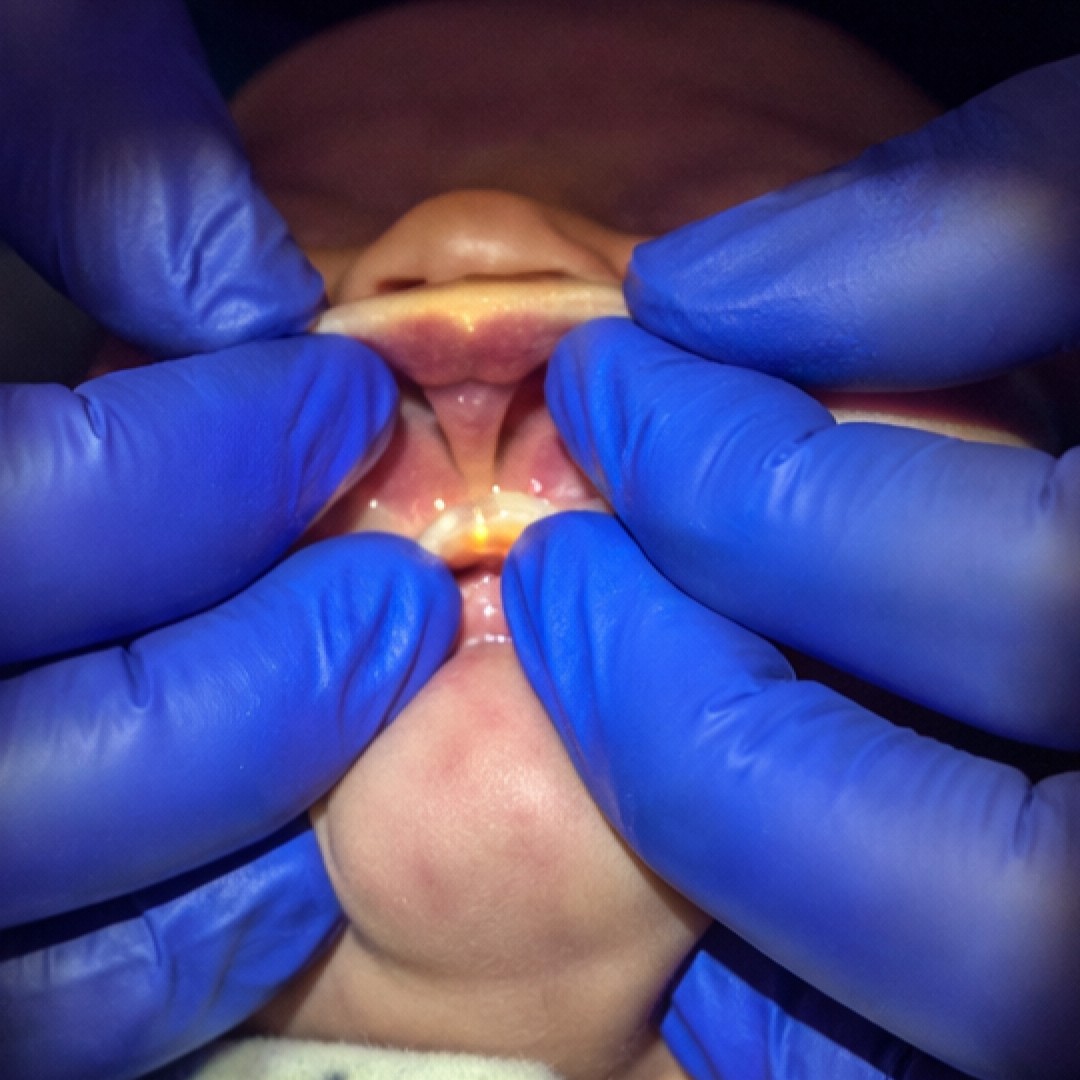
Tongue Tie Before
Tongue Tie After

The Bolton Kids Dental
Approach
We look at your baby as a whole, not just one small area. A tongue or lip tie can sometimes be part of the picture, but it’s not always the only reason feeding challenges happen. Things like positioning, muscle tension, or feeding patterns can also play an important role.
That’s why we take a collaborative approach. When needed, we work alongside trusted professionals to make sure your baby is supported from every angle—not just one. Depending on your baby’s needs, this may include support from:
Lactation consultants (IBCLCs)
Osteopathic or chiropractic care
Speech or myofunctional therapy
Physiotherapy or other healthcare providers
During your visit, we’ll help you understand what’s going on and recommend the right combination of support for your baby. Because no two babies are the same, every plan is personalized—with a focus on helping feeding feel more comfortable, natural, and enjoyable for both of you.
What To Expect At Your
Consultation
We’re proud to be one of the few offices that offer dual consultations, where you meet with both a Pediatric Dentist and a Lactation Consultant (IBCLC, RN) in the same visit. Your visit is designed to be calm, supportive, and provide you with a complete, collaborative approach.
During your appointment, we will:
Talk through feeding history and any concerns
Observe a feed when possible
Gently assess your baby’s mouth and function
Walk you through our findings and recommendations
Together, we’ll decide on a plan that feels right for your baby.
After the Procedure
Recovery & Support
After treatment, most babies are comforted quickly with feeding and close contact.
We’ll guide you through:
Simple aftercare and stretches
Ways to keep your baby comfortable
Feeding support as needed
1 week post-op follow up
We’ll also follow up with you as needed to make sure healing is going well and your baby is progressing comfortably.
Healing & Reattachment
Follow-Up Care
Comfort & Home Care
Stretches & Exercises
FAQ
What if I’ve been told my baby doesn’t have a tongue or lip tie?
Will my baby be in pain?
Will there be bleeding?
The area looks white or yellow—is that normal?
Can my baby still use a pacifier?
What if my baby has already had a tongue tie release?
Will my insurance cover the procedure?
How should I prepare for my visit?
Can both parents or caregivers attend the appointment?
Learn More About
Lip & Tongue Ties
We're Here to Help
Feeding challenges can feel overwhelming, but you don’t have to navigate them on your own. We’re here to support you, answer your questions, and help you feel confident in your next steps.